
Japan
Where Innovation Meets Education
Enquiry Form
Why Study in Japan
- Globally ranked universities with strong research focus
- Advanced technology and innovation-driven education
- Wide range of English-taught programs
- Affordable education compared to other developed countries
- Strong career opportunities in technology and engineering
- Part-time work opportunities for students
- Safe and highly developed country
- Rich cultural experience with modern lifestyle
Technological Excellence – Japan is a global leader in robotics, AI, and engineering innovation.
Globally Recognized Degrees – Japanese universities are highly respected worldwide.
Career Opportunities – Strong demand for skilled graduates in IT, engineering, and manufacturing.
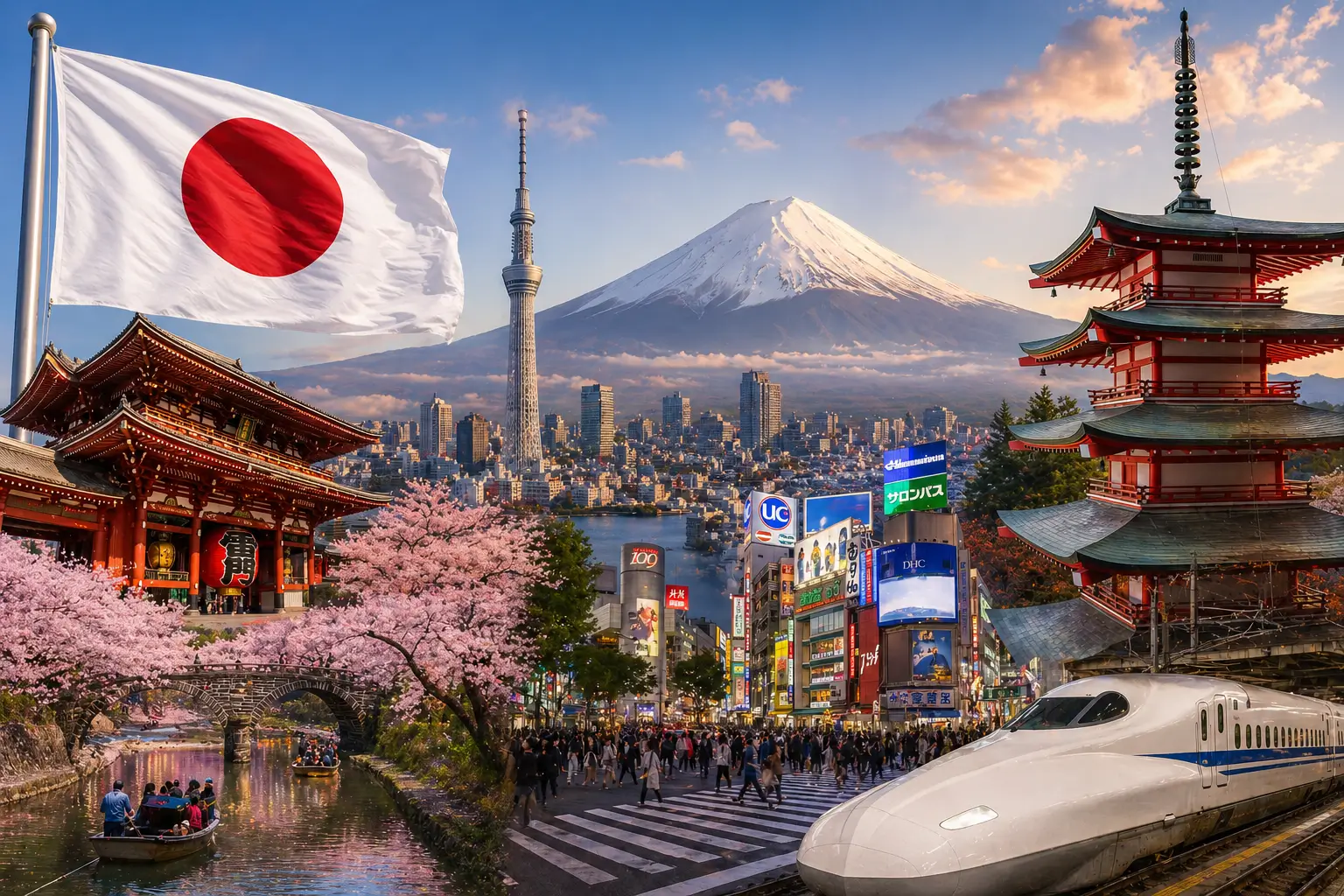
Unique Cultural Experience – Blend of traditional culture and modern technology.
Introduction
Japan is one of the leading study destinations known for its advanced education system, strong research facilities, and technological innovation. It offers a perfect combination of academic excellence and cultural experience.
With increasing English-taught programs and global recognition, Japan attracts students from around the world. The country provides excellent infrastructure, safety, and career opportunities.
Students gain both academic knowledge and practical exposure, making them industry-ready.
Japan — Fast Facts
- Top-ranked universities globally
- Strong focus on research and innovation
- Multiple intakes available
- Safe and clean environment
- Growing number of English programs
- Strong job market in technology sectors
Popular Study Fields
| Field | Programs |
|---|---|
| Engineering | Robotics, Mechanical, Civil |
| IT | AI, Data Science, Software Engineering |
| Business | International Business, Finance |
| Design | Animation, Game Design |
| Healthcare | Biomedical, Public Health |
Popular Institutions
Japan is home to several globally ranked universities known for academic excellence, research, and innovation.
These institutions offer strong programs in engineering, technology, business, and sciences, attracting international students worldwide.
| Location | Institution |
|---|---|
| Tokyo | University of Tokyo |
| Kyoto | Kyoto University |
| Osaka | Osaka University |
| Tokyo | Waseda University |
| Tokyo | Keio University |
| Nagoya | Nagoya University |
| Sendai | Tohoku University |
| Sapporo | Hokkaido University |
| Fukuoka | Kyushu University |
| Tsukuba | University of Tsukuba |
| Hiroshima | Hiroshima University |
| Tokyo | Tokyo Institute of Technology |
| Yokohama | Yokohama National University |
| Kobe | Kobe University |
| Chiba | Chiba University |
These universities offer world-class education with strong research opportunities, modern infrastructure, and excellent career prospects for international students.
Popular Courses
- Engineering & Robotics
- Artificial Intelligence & Data Science
- Business & Management
- Animation & Game Design
- Healthcare & Biotechnology
How to Apply
Step 1: Choose course & university
Step 2: Prepare IELTS / JLPT if required
Step 3: Submit application
Step 4: Receive admission offer
Step 5: Apply for student visa
Step 6: Travel and start your studies
Visa Requirements
| Requirement | Details |
|---|---|
| Offer Letter | Required |
| Language | IELTS / JLPT |
| Financial Proof | Required |
| Health Insurance | Mandatory |
Conclusion
Japan offers a unique combination of high-quality education, advanced technology, and strong career opportunities. It is an excellent choice for students seeking global exposure and innovation-driven learning.
Choosing Japan will help you build a strong academic foundation and a successful international career.
Cost of Studying in Japan
Japan offers high-quality education at a relatively affordable cost compared to other developed countries. Tuition fees are standardized across many universities, making it easier for students to plan their budget.
With government scholarships and university support, international students can significantly reduce their financial burden while studying in Japan.
Undergraduate Fees — Approximately
| Program | Annual Fee (JPY) |
|---|---|
| Bachelor’s Degree | JPY 500,000 – 900,000 |
| Technical Programs | JPY 600,000 – 1,000,000 |
Postgraduate Fees — Approximately
| Program | Annual Fee (JPY) |
|---|---|
| Master’s Degree | JPY 600,000 – 1,200,000 |
| Graduate Diploma | JPY 500,000 – 900,000 |
MBA & PhD Fees — Approximately
| Program | Annual Fee (JPY) |
|---|---|
| MBA | JPY 800,000 – 2,000,000 |
| PhD | JPY 500,000 – 800,000 |
Additional Expenses — Approximately
- Application Fee – JPY 20,000 to 50,000
- Health Insurance – JPY 20,000 to 40,000/year
- Books & Supplies – JPY 50,000 to 100,000/year
- Student Services – JPY 30,000 to 60,000/year
How to Save on Fees
- Apply for MEXT and university scholarships
- Choose public universities for lower fees
- Work part-time up to 28 hours/week
- Use student discounts for transport and food
- Plan accommodation wisely to reduce costs
Conclusion
Japan offers affordable education with excellent global recognition. With proper planning and scholarship support, studying in Japan becomes a smart and cost-effective choice.
Cost of Living in Japan
The cost of living in Japan depends on the city you choose. Tokyo and Osaka are more expensive, while cities like Fukuoka, Hiroshima, and Sapporo offer a more affordable lifestyle for students.
With proper budgeting and part-time work opportunities, international students can comfortably manage their living expenses in Japan.
Monthly Living Expenses — Approximately
| Expense | JPY Per Month |
|---|---|
| Accommodation | JPY 30,000 to 80,000 |
| Food & Groceries | JPY 20,000 to 40,000 |
| Transportation | JPY 5,000 to 10,000 |
| Utilities & Internet | JPY 5,000 to 10,000 |
| Personal Expenses | JPY 10,000 to 20,000 |
| Total Estimate | JPY 70,000 to 160,000 |
City-Wise Cost of Living — Approximately
| City | Monthly Cost (JPY) |
|---|---|
| Tokyo | JPY 120,000 to 180,000 |
| Osaka | JPY 100,000 to 150,000 |
| Kyoto | JPY 90,000 to 140,000 |
| Fukuoka | JPY 80,000 to 120,000 |
| Sapporo | JPY 70,000 to 110,000 |
Accommodation Options — Approximately
| Type | Monthly Cost (JPY) |
|---|---|
| Student Dormitory | JPY 20,000 to 50,000 |
| Private Apartment | JPY 50,000 to 100,000 |
| Shared Accommodation | JPY 30,000 to 70,000 |
Food & Transport Costs — Approximately
| Item | Monthly Cost (JPY) |
|---|---|
| Groceries | JPY 20,000 to 30,000 |
| Eating Out | JPY 10,000 to 20,000 |
| Transport Pass | JPY 5,000 to 10,000 |
| Bicycle | JPY 2,000 to 5,000 |
Tips to Save Money
- Choose cities like Fukuoka or Sapporo for lower living costs
- Cook at home instead of eating out frequently
- Use student transport discounts
- Share accommodation with other students
- Work part-time up to 28 hours per week
- Use student discounts for daily expenses
Conclusion
Japan offers a balanced lifestyle with affordable living options when planned properly. With part-time work and smart budgeting, students can live comfortably while studying.
Jobs in Japan
Japan allows international students to work part-time while studying, giving them an opportunity to gain practical experience, earn additional income, and understand Japanese work culture. This not only helps students financially but also improves their employability after graduation.
With proper planning, many students in Japan manage a significant portion of their living expenses through part-time work while also building valuable career skills.
Part-Time Work Rules
| Rule | Details |
|---|---|
| During Studies | Up to 28 hours per week |
| During Holidays | Up to 40 hours per week |
| Work Permission | Required from immigration (Permission to Engage in Activity) |
| On-Campus Jobs | Available in universities |
| Off-Campus Jobs | Allowed with proper permission |
Average Wages in Japan
| Job Type | Hourly Rate (JPY) | INR approx. |
|---|---|---|
| Retail & Customer Service | JPY 900 to 1,200 | ₹500 to ₹700 |
| Restaurant & Hospitality | JPY 900 to 1,300 | ₹500 to ₹750 |
| Campus Jobs | JPY 1,000 to 1,500 | ₹560 to ₹850 |
| IT & Tech Support | JPY 1,200 to 2,000 | ₹700 to ₹1,200 |
| Teaching Assistant | JPY 1,200 to 2,500 | ₹700 to ₹1,400 |
Popular Jobs for Students
Here are some of the most common part-time jobs available for international students in Japan:
- Convenience Store Staff (Konbini)
- Restaurant & Café Worker
- Supermarket Assistant
- Delivery & Logistics Jobs
- Hotel & Hospitality Staff
- English Tutor / Language Assistant
- University Campus Assistant
- Factory & Warehouse Jobs
Internship Opportunities
Many universities in Japan provide internship opportunities that help students gain real industry experience. These internships may be paid or unpaid depending on the program and company.
| Feature | Details |
|---|---|
| Duration | 3 to 6 months |
| Industries | IT, Engineering, Business, Manufacturing |
| Benefits | Industry exposure and job opportunities |
Work & Income Tips
- Get work permission stamp on your residence card
- Do not exceed 28 hours per week during study period
- Maintain proper work records and payslips
- Learn basic Japanese to increase job opportunities
- Use university job portals for better part-time roles
Conclusion
Working while studying in Japan not only helps reduce financial pressure but also provides valuable work experience and cultural exposure. With strong discipline and planning, students can successfully balance both academics and work life.
Post Study Work Visa Japan
Japan offers international students strong post-study work opportunities through job search visas and work visa transitions. Unlike countries with automatic work permits, Japan provides a structured pathway where students can stay, search for jobs, and transition into full-time employment.
This system ensures that students who graduate from Japanese institutions can build long-term careers in Japan’s strong and stable economy.
Post Study Work Options
After completing studies, international students in Japan can apply for a Designated Activities Visa, which allows them to stay in Japan and search for jobs.
| Visa Type | Purpose |
|---|---|
| Designated Activities Visa | Job search after graduation |
| Work Visa | Full-time employment after getting job |
Visa Duration
| Visa | Duration |
|---|---|
| Job Search Visa | Up to 1 year (extendable) |
| Work Visa | 1 to 5 years (renewable) |
Eligibility Criteria
- Must graduate from a recognized Japanese institution
- Must hold a valid student visa at the time of application
- Proof of active job search required
- Basic Japanese language skills recommended (JLPT preferred)
- Financial support proof for stay period
Career & Work Visa Pathway
| Stage | Details |
|---|---|
| Step 1 | Graduate from Japanese university |
| Step 2 | Apply for job search visa (Designated Activities) |
| Step 3 | Secure full-time job offer |
| Step 4 | Convert to work visa |
| Step 5 | Apply for long-term residence / PR after years of work |
How to Apply
| Step | Action |
|---|---|
| Step 1 | Complete your course in Japan |
| Step 2 | Apply for Designated Activities Visa |
| Step 3 | Search and attend job interviews |
| Step 4 | Receive job offer from company |
| Step 5 | Convert to work visa |
Conclusion
Japan provides a clear and structured pathway for international students to build their careers after graduation. With a strong economy, high demand for skilled professionals, and long-term work visa options, Japan is an excellent destination for students looking to study and settle abroad.
With proper planning and guidance, students can successfully transition from education to employment and build a stable international career in Japan.